
Cordless Power Tool Battery Platform Guide for South Africa (2026)
Updated 15 September 2026
Buying your first cordless drill or grinder feels like a single, small purchase. It isn't — you're also choosing a battery platform, and that choice quietly shapes every cordless tool you buy after it. Batteries and chargers are usually the most expensive part of a cordless kit, so once you own two or three of them, staying on the same platform stops being a preference and starts being the only sensible option. Here's what actually matters before you commit.
What a "battery platform" actually is
A battery platform is a manufacturer's proprietary battery-and-charger system, built to fit dozens of tools across that one brand's cordless range — drills, saws, sanders, grinders, even garden tools. The batteries are not interchangeable between brands: a battery from one platform physically will not click into another manufacturer's tool, whatever an aftermarket adapter claims. Once you own a battery and charger, every future tool you buy as a "bare tool" (sold without a battery, sometimes called a "skin") on that same platform is instantly usable — no extra battery or charger to buy, and no second charger cluttering the workshop.
Why this saves real money
A battery and charger typically account for a large share of what you pay for a first cordless tool — often close to half the kit price on mid-range tools. Buy a second tool on the same platform as a bare tool and you skip that cost entirely:
- First tool: full kit — tool, battery, charger, case.
- Every tool after that, same platform: bare tool only. No battery, no charger, meaningfully cheaper.
- Battery pooling: one charged battery can move between whichever tool you're using that day — you don't need a battery permanently parked in every tool.
Mix brands instead, and every single tool needs its own battery and charger from day one — there's no pooling, no discount on the second purchase, and you end up with chargers for two or three different systems taking up bench space.
Voltage and amp-hours, in plain terms
Voltage (V)
Roughly, the tool's power ceiling. 12V-class batteries suit light, compact tools (small drills, drivers); 18V is the common mid-to-heavy-duty standard covering most drills, saws, grinders and sanders; some brands also run a 36V (or dual-voltage) tier for higher-demand tools like mitre saws. Within one platform, a higher-voltage battery is usually backward-compatible with the platform's lower-voltage tools, but check the specific brand's compatibility chart before assuming — not every platform mixes voltage tiers the same way.
Amp-hours (Ah)
This is the battery's capacity — how long it runs before needing a recharge, not how powerful the tool is. A 2.0Ah battery is lighter and cheaper, fine for occasional use or lighter tools; a 4.0Ah-6.0Ah+ battery costs more and weighs more but runs far longer under load, which matters more once you're using higher-draw tools like circular saws or grinders regularly. It's common (and normal) to run a small battery on a drill and a larger one on a saw or grinder within the same platform.
What to check before you commit to a platform
- Ecosystem breadth: look past the tool you need today. Does the brand actually make the other tools you're likely to want in a year or two — a saw, a sander, an oscillating multi-tool? A platform that only covers drills and drivers well will leave you buying into a second system later anyway.
- Buy bare tools after the first kit: once you own one battery and charger, every additional tool on that platform should be bought "bare" (skin only) — buying a full kit again just duplicates a battery and charger you don't need.
- Don't use cross-brand adapters: adapters that claim to run one brand's battery in another's tool exist, but they sit outside both manufacturers' warranty and safety testing — not worth the risk to save on a second battery.
- Match battery size to the tool, not the other way round: keep a smaller, lighter battery for drills and drivers you hold for long stretches, and reserve your larger-capacity batteries for saws, grinders and sanders that draw more current.
What one platform looks like in practice
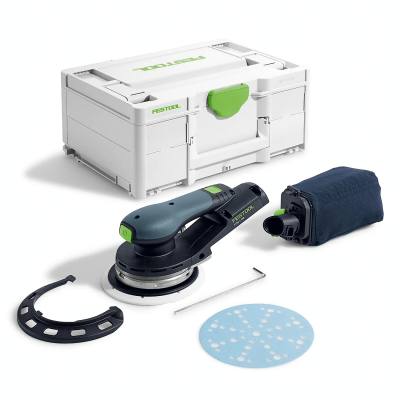
On Ordinal's own shelf right now, a single 18V battery platform covers a cordless drill, two cordless circular saws, a cordless orbital sander, and a cordless oscillating multi-tool — five different jobs, two batteries, one charger. That's the whole point of a platform: the battery you already own keeps paying for itself every time you add a tool, rather than starting the cost from zero again.
Shop the cordless battery platform

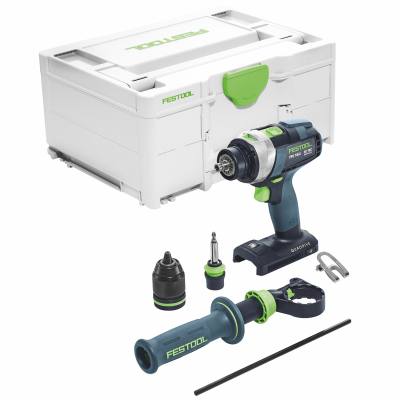
Festool TPC 18/4 I-Basic QUADRIVE Cordless Percussion Drill 18V

Festool TID 18 HPC 4,0 I-Plus Cordless Impact Driver in Systainer
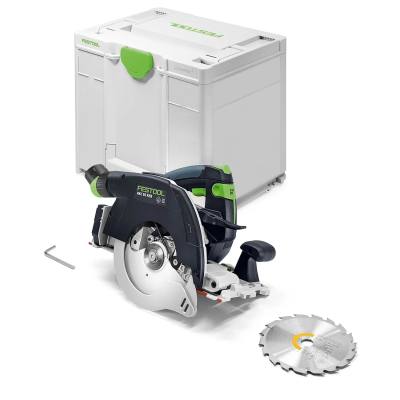
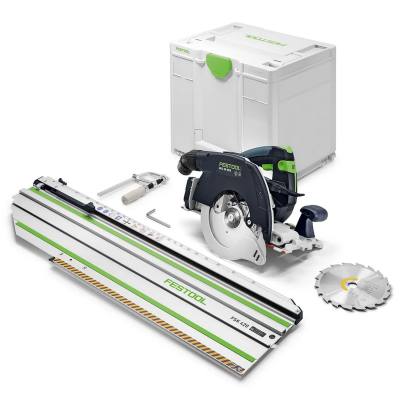
Festool HKC 55 KEB-Basic-FSK 420 Cordless Circular Saw (incl. 420mm Guide)
Choosing your first cordless tool? See our cordless drill buying guide or angle grinder buying guide, or browse all buying guides.