
Best Cordless Drill Buying Guide for South Africa (2026)
Updated 28 August 2026
A cordless drill is the most-used power tool in most South African toolboxes — and the range on the market runs from budget DIY sets to trade-grade kits costing ten times as much. The gap in price is real, but it's driven by a handful of specific things, not marketing. This guide covers what actually matters before you buy.
Drill, impact driver, or hammer drill?
These get sold as if they're interchangeable, but they do different jobs:
Drill / driver
Straightforward rotary drilling into wood, metal or plastic, plus driving screws at low-to-medium torque. The right choice for general household and DIY use — shelves, curtain rails, flat-pack furniture.
Impact driver
Adds a rotational hammering action when resistance builds, delivering far more driving torque without you having to lean into it. Ideal for long screws, decking, and lag bolts — it's why your wrist doesn't have to do the work. Not the best choice as your only drilling tool, since the hammering action can chew up soft materials if you're not careful.
Hammer drill / SDS rotary hammer
A genuine percussive hammer action for drilling into masonry, brick, and concrete — different from the basic "hammer" setting on a cheap combi drill, which is far weaker. If you're mounting anything into a brick wall regularly (SA's most common wall material by far), an SDS-style rotary hammer will get through it faster and with less strain on the tool.
Many mid-range "combi drills" combine standard drilling with a basic hammer-drill setting in one tool — a reasonable one-tool compromise for occasional masonry work, just don't expect SDS-level performance from it.
Sizing by how often you'll actually use it
Occasional DIY — shelves, curtain rails, flat-pack
A 12V-18V drill with a 2.0Ah battery covers this comfortably. There's no benefit paying for a higher-capacity battery you'll rarely run down.
Regular weekend projects — decking, renovations, furniture builds
Step up to 18V with a 4.0Ah battery or larger, and it's worth paying extra for a brushless motor at this tier — you'll notice the difference in runtime and how the tool holds up over a full weekend of use.
Frequent or trade use
Look at 5.0Ah-6.0Ah+ batteries and brushless as standard. At this level, the smarter question isn't "which drill" but "which battery platform" — see the note below.
Brushless vs. brushed motors
Brushless motors run more efficiently (longer runtime per charge), generate more torque for their size, run cooler, and last longer since there are no brushes to wear out and eventually replace. They cost more upfront. For occasional light use, a brushed motor is still perfectly fine and saves you money; for anything regular or trade-grade, brushless pays for itself in runtime and tool life.
Chuck size and torque settings
Most cordless drills use a 10mm or 13mm keyless chuck — 13mm accepts larger bits, useful if you'll ever drill bigger holes in wood or metal. The clutch/torque adjustment ring (usually numbered settings plus a drill-only mode) limits how much force the tool applies before it stops turning — set it low for driving screws into soft material like drywall or chipboard so you don't strip the screw head or drive it too deep, and switch to full power or drill mode for actual drilling.
One battery, several tools
Most 18V cordless systems are built as a platform — the same battery that powers your drill also fits the manufacturer's impact drivers, angle grinders, circular saws, and more. If there's any chance you'll add a second or third cordless tool later, it's worth checking what else runs on the same battery before you commit to a brand, rather than buying into two incompatible battery systems by accident.
Shop cordless drills

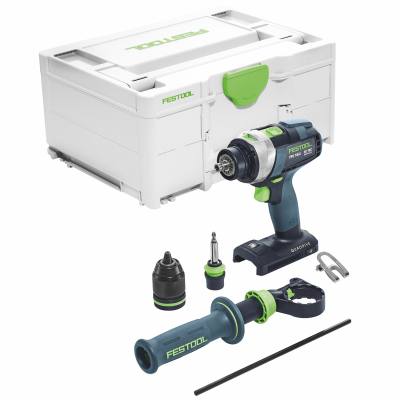
Festool TPC 18/4 I-Basic QUADRIVE Cordless Percussion Drill 18V
Looking for backup power instead? See our inverter & UPS buying guide or browse all buying guides.